Showing posts with label Community Kitchen. Show all posts

Sunday, 14 April 2019

Dayalbagh: An Eco-Village

A Wikipedia article defines Eco-Villages as "... traditional or intentional community with the goal of becoming more socially, culturally, economically, and ecologically sustainable. It is consciously designed through locally owned, participatory processes to regenerate and restore its social and natural environments".

A tree-laden road within Dayalbagh

The article further states, "Eco-villagers are united by shared ecological, social-economic and cultural-spiritual values. Concretely, eco-villagers seek alternatives to ecologically destructive electrical, water, transportation, and waste-treatment systems, as well as the larger social systems that mirror and support them. Many see the breakdown of traditional forms of community, wasteful consumerist lifestyles, the destruction of natural habitat, urban sprawl, factory farming, and over-reliance on fossil fuels as trends that must be changed to avert ecological disaster and create richer and more fulfilling ways of life".


And what better example of an eco-village than Dayalbagh. Dayalbagh is more like a small town, with 2,500+ permanent residents, the population increasing manifold during Basant, Holi and Bhandara weeks with the influx of pilgrims. Additionally, its way of life thinking and practices influence the communities around Dayalbagh.

Our post below is on practices followed in Dayalbagh, the eco-village.

Go green,
Anurag
Dayalbagh, an eco-village

Eco-villages are urban or rural communities of people who strive to integrate a supportive social environment with a low-impact way of life. To achieve this, they integrate various aspects of ecological design, permaculture, ecological building, green production, alternative energy, community building practices, and much more. Eco-villages are living models of sustainability. They represent an effective, accessible way to combat the degradation of our social, ecological, and spiritual environments.

Dayalbagh is an eco-village/city, quiet and peaceful with a largely self-sustaining agricultural production, water harvesting and increasing use of renewable solar energy.


Prem Nagar, a Mohalla in Dayalbagh

Education, agriculture and industries prosper in harmonious and ecologically sustainable manner. Dayalbagh is greener and more sustainable since its foundation in 1915, even though its population has increased. Dayalbagh’s eco-development, presents an admirable combination of material and spiritual development. It represents a classic case of self-sustained eco-friendly existence of human settlement in close harmony with the nature.

Activities

Self-Governance
Civic affairs are managed through a committee of elected representatives under the overall supervision and control of a primary committee. The eco-village is divided into mohallas, with each having a Sarpanch and Panches for different activities of the mohallas.  Honorary services are imparted by the residents of the village.

Water and Electricity Supply
Water supply to the village is provided through tube wells. To sustain ground water levels, rain water harvesting schemes have been implemented. For electricity needs the village bulk purchases are made from M/S Torrent Power Ltd. To ensure uninterrupted electricity supply, the village also has its own back up generation facility. There is also an increasing use of solar power. Solar powered lights have been installed in open spaces within and outside the village in selected areas and also for street lighting. Solar power units are installed in all institutional buildings. Moreover, to reduce power consumption, LED lights are used to the maximum possible extent.


Renewable Power at Dayalbagh


Renewable Power in Cooking Applications

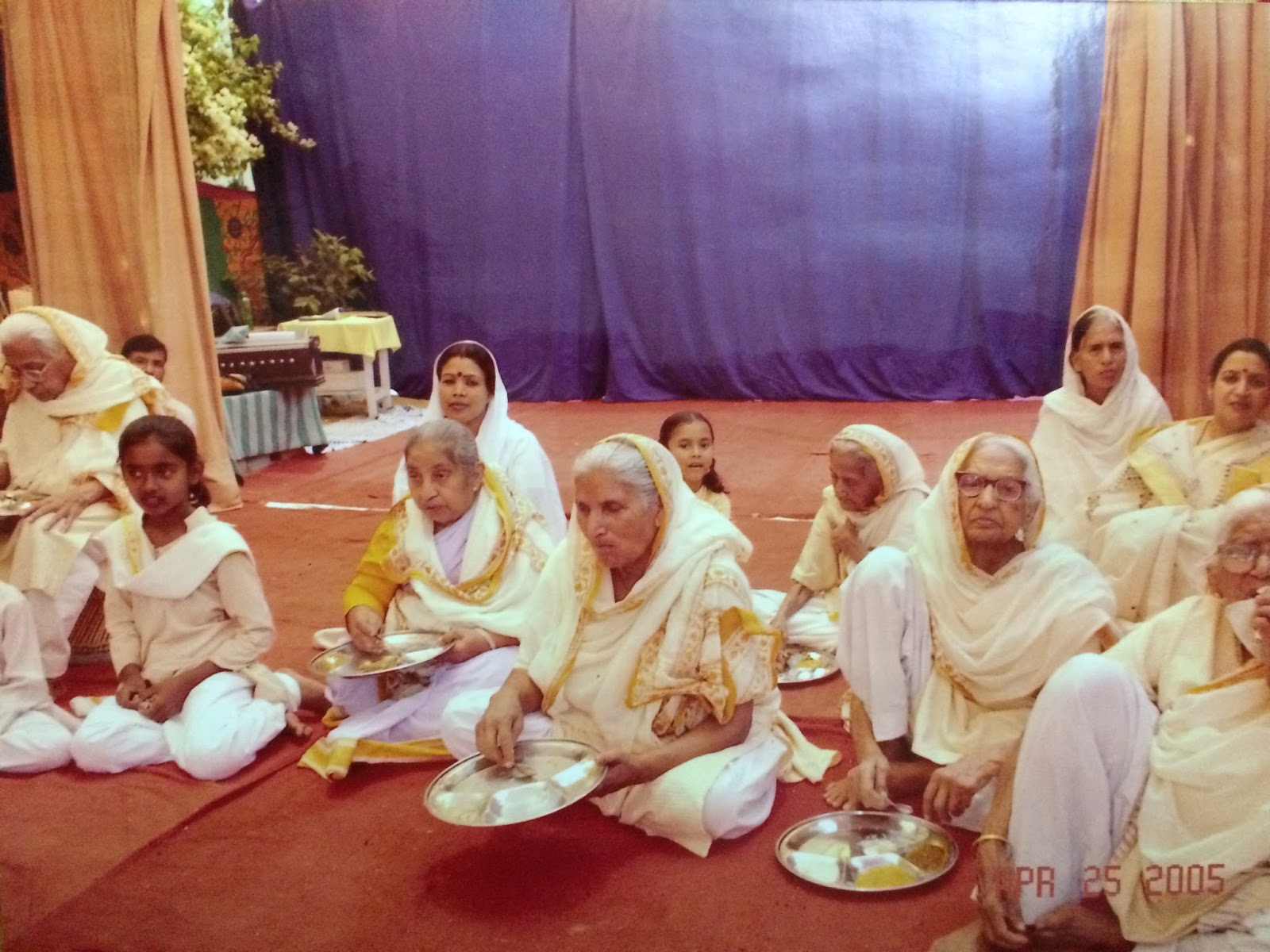
Community Kitchen
Bhandar Ghar is the Rasoi (Kitchen) which prepares lunch and dinner for the residents of the Dayalbagh colonies and for the visitors.


The raw material like wheat, rice, lentils, mustard oil, vegetables including potatoes and onions are grown and produced in the Dayalbagh fields with selfless service of the Dayalbagh Residents and Visitors. The Bhandar Ghar has minimal number of regular staff and the major part of the operation is supported by teams of volunteers in the age group of 18 to 90 yrs.


Bhandar Ghar: The Community Kitchen

Sewage and Garbage Disposal
There is a regular sewage system and garbage disposal. Garbage disposal includes segregation of biodegradable (kitchen waste) and non-biodegradable waste at each house of the village. There are well established treatment facilities for effluents. Treated water is used for irrigation.


Aeration Ponds

Security and Surveillance
Safety and Security of the colony is maintained by day and night patrolling (pehra) in shifts by the residents. Community policing through watch and ward department is performed for safeguarding public property. Most recently, CCTV cameras have been installed at various locations in the village which are also monitored by the residents.

The streets are patrolled by Residents at Night

Educational Hub
Education from the pre-nursery to the Ph.D. level and beyond is imparted through DEI. Additionally, the village has a School of Languages to teach regional and foreign languages, a School of Art and Culture to provide training in music, dance and handicrafts, a Tailoring school for empowerment of women from the weaker sections of the society, an Indian Music Training Center and a School of Dress Designing and Interior Decoration. A Day Boarding School has also been set up to provide special tutorial teaching to the students of under privileged families who do not have adequate facilities at home.

Primary School in Dayalbagh

Economical Agriculture and Farming
The topography of the land was initially dominated by ravines, low mounds, patches of rocks and stones and alkaline soil, sand dunes and patches of reeds and weeds, lying as waste-land. Since 1942 under the ‘Grow more food’ campaign, the uneven and unproductive barren lands have gradually been made suitable for cultivation. Today, in the Dayalbagh area, there are nearly 1531 acres of agricultural farms where cereals, pulses, oil seeds, vegetables, fruits, cash crops (potato, sugarcane, etc.) and fodder are cultivated. Farming activities are eco-friendly and based on organic farming techniques that helps in soil conservation and enrichment.


Residents, Students and Pilgrims performing Agriculture work

Both traditional and modern agricultural practices are adopted here. Agriculture is supplemented by Gaushala wastes for meeting out its manure requirement. Cooperative efforts are made in performing different agricultural activities and no chemical substances like insecticides, fungicides, weedicides or chemical fertilizers are used. The agricultural produce of Dayalbagh is sufficient to meet the requirement of the residents and the pilgrims who come for short visits.

Fodder for the Cattle at Dayalbagh Dairy

Horticulture
Horticultural activities are practiced in Dayalbagh: there are orchards of mango, Jack fruit (Artocarpus spp.), Guava (Psidium) and various citrus species along with many other fruit trees to provide large canopy cover as well as a supply of some fruit.
Healthy Diet: Horticulture - Kinnow Plantation

Cattle Yard and Dairy
Dayalbagh has its own cattle yard with over 800 head of cattle which fulfills the milk requirement of the residents. Its fodder requirements are met internally round the year. Animal waste is recycled and used as manure in fields. The dairy produces pasteurized milk and several milk products employing the most advanced techniques. These products are also sent outside the country.


Retirement Home for Older Cattle

Green Belt
The construction of green-belts has been an important feature of land use planning in Dayalbagh. These are in the form of a tree corridor all along the Yamuna river bank, in agricultural and farming areas, and, areas earmarked for timber plantation.

Ecology and Biodiversity in the Green Belt
The western part of Dayalbagh eco-village has triangular patches of dense plantations reaching the bank of the Yamuna. While most of the uneven land has been leveled and converted into well-formed green fields, in some areas the uneven topography remains. This area is being used for cultivating crops such as taramira, growing trees such as amla and some timber plantation. An orchard of citrus fruits has also been established in this area.

Two species, Prosopis and Acacia are also maintained in the region.

Waste Treatment: Composting
In Dayalbagh, domestic waste is mostly organic, and each member of the population produces approximately 200 kg of organic solid waste per year. Other sources include garden litter and wastes from dairy sheds, etc. The residents segregate the wastes into biodegradable and non-biodegradable material which is collected: pooled biodegradable wastes are directly sent to composting sites while non-biodegradable materials are sent to recycling points.

Transport
The most popular modes of transport in the area are bicycles and cycle rickshaws; efforts are on restrict the number of fossil-fuel driven vehicles in this area to reduce congestion and to accompanying noise and air pollution. Within the Dayalbagh colony, transport is provided by electric vehicles and rickshaws.


Electric Vehicle, ready to ferry Residents and Visitors

Dayalbagh has grown into a center of high spiritual, academic and moral values and has provided solace, satisfaction, peace and enlightenment to its residents and visitors who come in thousands seeking inner and outer peace.

Friday, 17 November 2017

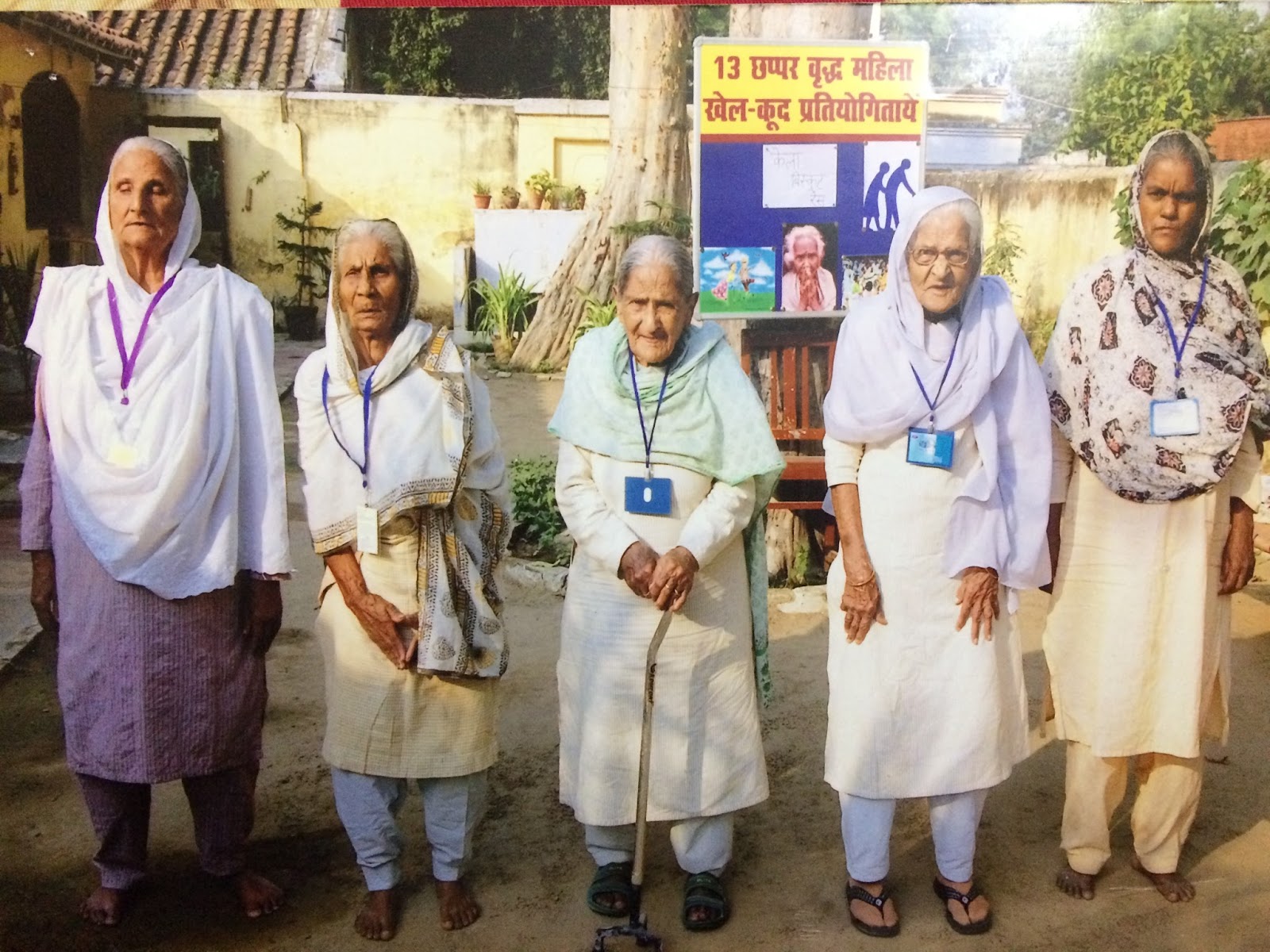
Senior women of Dayalbagh तेरह छप्पर leading an enriching & socially fulfilling life

Aldous Huxley, the English writer, novelist, philosopher said,

“The secret of genius is to carry the spirit of the child into old age, which means never losing your enthusiasm.”

Respecting our elders is a value and quality that should be ingrained in everyone. In today’s rapidly evolving world and with the meaning of family unit shrinking, elders are no longer treated with respect.

Today, I bring you a story of these amazing senior women in Dayalbagh, living an active and socially useful life, a story (and the photographs) that will bring cheer to your hearts. The story of the

Senior women of Dayalbagh Terah Chappar (तेरह छप्पर) leading an enriching & socially active and useful life


This story is written by Dr. Gur Pyari Satsangi, In-charge of Terah Chappar (तेरह छप्पर) and Professor in the Faculty of Education at Dayalbagh Educational Institute (DEI), assisted by our regular contributor Prof. Sarla Paul, Professor Emeritus in the Faculty of Education at DEI.

Let your hearts glow,
Anurag
----------------


Dr. Gur Pyari and Prof. Sarla Paul write...

Complementing old age Robert Browning a Victorian poet remarked:

“Grow old along with me! The best is yet to be,
The last of life, for which the first was made.
Our times are in His hands who saith,
A whole I planned, youth shows but half;
Trust God: See all, nor be afraid.”


People are generally apprehensive of the repercussions of old age. Their apprehensions are based on the prevailing scene in society where there is a loss of compassion and respect for the old and debilitated members of the family. We have become desensitized towards our core values which are an indispensable part of our culture. It is regretful to see that parents and grand parents who willingly helped their offspring and willingly endured extreme hardships with a sense of pleasure in bringing up their children and grand children, are neglected and ill treated by their own kith and kin in return when they grow old and are in dire need of help and support from them.


Getting old is an inevitable process. With advancement of age, the physical strength and vigour are no doubt affected but, on the other hand, with old age comes maturity, wisdom and insight, which should be utilized by the younger generation for their well being. There is an Italian proverb which says ‘If nothing is going well, call your grandmother.’

The older generations needs society's affection and attention. Caring for them benefits us in many ways and prepares us to face life in fulfillment and satisfaction. In bringing up and nurturing children the major role is that of mothers. They must be accorded proper respect and importance in the family and the society at large when they are old.


Emphasizing the need of giving proper status to women in the society, Revered Sir Anand Sarup ji remarked, ‘Let the Indians rise and become conscious of the vital importance of giving liberal and useful education to their women, of behaving towards the fair sex in a manner worthy of them, of according to them the respect and regard which is their right, and with the grace of the Supreme Father, we shall progress and prosper and in the fullness of time become a model society worthy of emulation by other ambitious and progressive communities of India.’


As is expressed in the foregoing lines, due care has been taken for safe, respectful, self dependent and socially useful life of the old ladies of the colony of Dayalbagh. They lead a respectful life together inside the colony. It is designated as Terah Chhappar (तेरह छप्पर - a line of thirteen quarters with thatched roofs, rather tiled roofs). It is an opportunity given to them based on what H. W. Longfellow an American poet stated:

‘For age is opportunity no less than youth itself, though in another dress,
And as the evening twilight fades away,
The sky is filled with stars invisible by the day.’  

Inception of Terah Chhappar and its Historical Perspective:
These Quarters were constructed towards the western side of the Community Satsang Hall for the stay of Satsangis in the year 1918 after the foundation of the colony of Dayalbagh in 1915. In the year, 1993 it was converted into an ‘Old Age Home’ and it was meant exclusively for the residence of old ladies of the community. These women are allotted independent accommodation. Their houses consist of one room with an outer enclosed veranda and an attached toilet at present. At the front side is a vast ground enclosed by a boundary wall  which serves the purpose of safety and privacy.


Terah Chappar was started with two major objectives. Firstly, enabling the old ladies of the colony to participate in Dayalbagh and Satsang Activities independently, with cooperation and sense of social responsibility without any  interference from their family members. Secondly, to take part in the organisation of welfare programme for the old ladies and children of the community. The scope of activities of the residents has developed manifold and at present the activities of Terah Chappar residents include:

Regular and Systematic Routine: 
The women follow a prescribed regular and systematic routine and thus keep themselves busy through the day and are relieved from unnecessary idle talks, loneliness or negative thoughts. Their daily  routine spans from 4:30 AM to 9 PM. The day starts at 4:30 AM, when they get ready to offer prayer in the Community Satsang Hall. This is followed by Physical Training exercises in a group and then taking part in agricultural work which is a fundamental  part of the life within  the colony. After Breakfast, which is provided to them on minimal subscription in which they can also offer assistance turn-wise,  they take part is some other  selfless service activities suited to  their interest and capability. It is both community service and also  keeps  them  engaged. This serves as a means of fulfillment of their earnest inclination and yearning to remain active and useful to the community till their last breath.


After lunch which is served to them in the dining hall, they take  rest for a short while  in the afternoon. There is arrangement for regular visits of a team of doctors who are available to them to keep them mentally and physically fit and healthy. In the evening they attend Satsang in the community Satsang Hall. Their day concludes with an  early dinner followed by collective prayer in their own hall and then they go to bed with a sense of utmost satisfaction, rejuvenating for the next day.
   
Production of Material for Consumption in Dayalbagh:
The Ladies engage themselves in production and supply of articles for Dayalbagh residents or Satsangis which also serves to support their income. The various skill-based activities include weaving mattresses, chairs, stools, table mats, etc. handicrafts i.e. crochet work, embroidery, block printing, assisting in the preparation of baked food items i.e. Nan Khatai etc..


Seva Activities:
The Ladies take part in multiple Seva activities in an organised and formally assigned manner. The various  seva include Pahra duty (watch & ward duty), helping medically unfit and handicapped ladies, assisting in the preparation of breakfasts, lunch and dinner, extending assistance and support in organising various events and functions in their premises, preparation of Aam ka Panna  for the children who give pahra (watch and ward duty) in the day time during summer vacations etc.


Cultural and Personality Development Programmes:
They take part in cultural activities which include singing devotional songs, dancing and dramatisation on current topics etc. Their organisation of annual cultural function is a source of their entertainment and an outlet and expression of their feelings and emotions, and helps in purging from their minds of any strong negative and undesirable emotions. These serve for their wholesome personality development. On such occasions  they are blessed with the presence of Revered Prof. Satsangi.


Games and Sports:
It is an annual feature in which they take part in various games and sports with full  energy and vigour and a cheering audience, re-living their highly active days. It gives them pleasure and makes their minds active and energetic


Organisation of Summer School for Children:
This a novel  feature which started from the year 2003. Since then it is regularly organised for 21 days starting around 5th May and culminating by the first week of June  every year. In it children living in Dayalbagh, studying in classes one to ten, get their names enrolled. They follow a regular routine, get coaching in various school subjects and take part in physical exercises, cultural, literary and dramatic activities. Certain competitions are organised in which all the children participate with full zeal. The main purpose is to help children utilize their summer time fruitfully and for the ladies, it is an additional avenue for rendering  selfless service where the women of Terah Chappar actively participate.


Organising Literacy Classes:
Education is the basic need of all especially of women folk as has been emphatically pronounced by Sir Anand Sarup ji, the August Founder of Dayalbagh, ‘The Indian women have begun to show signs of an awakening, taking the foremost  part in the varied public activities, suffering extreme hardships most cheerfully, adapting themselves to new and novel conditions in a splendid manner and generally showing to the world that, given suitable opportunities, they will not be found lacking grit, determination and enthusiasm.’ These classes are arranged with the support of literate ladies for the benefit of those who remained deprived of this facility during their formative years. It is never too late to learn.

My deep respect for this great example of Community Living!

Friday, 7 July 2017

Amrit - the Food for Divine Mortals

According to Hindu Mythology, on churning of Kshir Sagar (Ocean of Milk), Dhanvantari, the heavenly physician, God of Ayurveda, emerged with a pot containing Amrit, the heavenly nectar of immortality. A fierce fight ensued between Devas and Asuras for the nectar. To protect the nectar from Asuras, Garuda took the pot, and flew away from the battle-scene. The Devas appealed to Vishnu, who then took the form of Mohini and as a beautiful and enchanting damsel, Mohini distracted the Asuras, took the Amrit, and distributed it among the Devas, who drank it.1

Have you tasted Amrit? Do you have the desire to become one with the Divine?

The Amrit (अमृत) that I am referring to, comes from a very different Manthan (churning). A daily Manthan of Love, Devotion, Selfless Service and above all Grace. A Manthan where everyone can participate and partake in the distribution.

In her book, Bittersweet: Thoughts on Change, Grace, and Learning the Hard Way, Shauna Niequist writes, “I think preparing food and feeding people brings nourishment not only to our bodies but to our spirits. Feeding people is a way of loving them, in the same way that feeding ourselves is a way of honoring our own createdness and fragility.”2

Our post this week is on
"Amrit – the Food for Divine Mortals".

The post below is by Mr. Rajiv Narain. Mr. Narain left his leadership position in the hospitality industry, where he headed operations for the Jaypee Palace Hotel in Agra and earlier headed operations for key hotels of the Taj Group to do “Seva” (selfless service) as the Deputy General Manager at the “Bhandar Ghar” in Dayalbagh, a community kitchen that serves both the residents of Dayalbagh and the pilgrims that make their way to Dayalbagh from far and near.


Eat Healthy,
Anurag
-----------------------------

Mr. Rajiv Narain writes…

Dayal Bhandar or Bhandar Ghar (Dayalbagh Community Kitchen) opened on 16th Feb 1915.

As a child, I remember sitting on the floor of our mother's kitchen at home and eating food served from the Patila (pot) along with hot Phulkas (puffed Indian bread) straight from the Tava (pan) and Sigri (stove). Food which was fresh and tasty accompanied with lots of love and affection.

This is exactly what is happening at the Bhandar Ghar. It is the Rasoi (Kitchen) which prepares lunch and dinner for the residents of the Dayalbagh colonies and for the visitors.

The raw material like wheat, rice, lentils, mustard oil, vegetables including potatoes and onions are grown and produced in the Dayalbagh fields with selfless service of the Dayalbagh Residents and Visitors and in which the Revered Leader also participates hence all the ingredients are blessed with Grace, Love and Affection.

The Bhandar Ghar operations start at 4:30 AM in the morning with a group of lady volunteers cutting vegetables and cooking starts at 6 AM by trained and experienced staff and the food is ready for dispensing at 9:30 AM sharp for about 1,000 diners normally, the number goes up to anywhere between 6,000 to 15,000 during Bhandaras (a gathering of pilgrims). As the lunch finishes the preparations for dinner starts by another group of lady volunteers and the dinner is ready by 6:30 PM sharp. Simultaneously the roti (puffed Indian bread) making happens between 6 AM and 12:30 PM in the morning and between 4:30 PM and 8 PM in the evening by a group of lady volunteers and is made manually on wood/coal fired Bhattis (furnace) and about 10-12,000 rotis are made every day.


The Bhandar Ghar has minimal number of regular staff and the major part of the operation is supported by teams of volunteers in the age group of 18 to 90 yrs. The dedication and punctuality of the elders is unmatched and exemplary.


The biggest challenge for the Bhandar Ghar management is to keep the food cost under control and as per the budget as there is an unbelievable price of Rs. 6/- meal (vegetable, dal, roti, rice) charged to each diner. The monthly expenditure is checked and audited to keep it in line with the budget.

The menu changes every day with a special menu for lunch on Sunday’s followed by khichadi for dinner, so that you are ready for a busy Monday.

The Bhattis (furnace) are lit with wood cut from the dead trees from our fields and the challenge ahead is to find an alternate fuel as dead wood is becoming scarce day by day. We also use solar energy and gasifier and are dependent on sunlight and wood respectively. Efforts are on for induction cooking as an alternate with the help of solar and steam generation.
Bhandar Ghar also boasts of its horticulture in the form of beautiful front lawns with multi-colored seasonal flowers. It also has medicinal and fruit trees like Neem, Jamun, Bel, Guava, Lemon-tree and Drumstick.

There is a continuous effort to maintain and improve hygiene in preparing and serving food by way of training and providing appropriate tools. In order to ensure food safety, water from an R.O. plant is used for all preparations.

In case of any excess food, the same is informed to the rest of the
Agra branches for pick up and leftovers are relished by Cattle at the Gaushala (Cowshed).

The day ends with utmost satisfaction if all diners are satisfied with our Seva in preparing tasty, hygienic and safe food.

Welcome to Bhandar Ghar!


Attribution:

  1. Photograph of Samudra Manthan by Ram Samudrala - Own work by the original uploader, Public Domain, https://commons.wikimedia.org/w/index.php?curid=30569352

References:
  1. Samudra Manthan - https://en.wikipedia.org/wiki/Samudra_manthan
  2. Shauna Niequist - Bittersweet: Thoughts on Change, Grace, and Learning the Hard Way