Showing posts with label Tod-Mod-Jod. Show all posts

Monday, 31 December 2018

Building Innovators and Creators: Tod-Mod-Jod

Gwynne Shotwell, the President and Chief Operating Officer at SpaceX, states, “You can't be on the cusp of innovation and at the forefront of technology if you're wearing blinders. If you don't have an exploration program where you're exploring your world here on Earth, underwater, and in space, then you're wearing blinders and handicapping yourself”.

Many of the programs at Dayalbagh and DEI are designed to get children to be early explorers. Our post today is on “Tod-Mod-Jod”, a program to build curiosity in children and help them become innovators, creators and inventors.

Happy Exploring,
Anurag


तोD-मोD-जोD


Education is the crucible in which innovations and creativity are nurtured. Promoting creativity and originality through our educational institutions is a first step towards broadening and deepening the impact of innovation in our society and economy. To foster creativity at an early stage and to encourage an innovative mindset in the learners, it is necessary to provide a hands-on learning environment where students can de-construct, re-construct or re-purpose everyday objects that they see or use.


Rationale
The innovative skilling initiative in Dayalbagh Educational Institutions is based on the concept of, “Tod-Mod-Jod” or “तोD-मोD-जोD”, i.e. learning through dismantling, joining, adding, assembling, shaping, designing, redesigning, reshaping. This method of learning is in contrast to the conventional training. तोD-मोD-जोD (TMJ) not only allows students to understand the scientific principles behind the everyday products they use, but also helps the students to expand their horizons to larger concepts and applications so as to enable them to solve real world problems. For instance, students typically do not know the inside of a ceiling fan, तोD-मोD-जोD (TMJ) session would help them to understand how mechanical airflow and electric concepts and components are used.


Description
Dayalbagh Educational Institute introduced तोD-मोD-जोD at middle school level for innovative and self-motivated students who want to create a new product out of those used in daily life. The teacher as mentor encourages students to follow their creative instincts. The feedback from students shows a complete change in their perception towards machines and devices. Curiosity and inquisitiveness are encouraged. These are critical for nurturing an innovative mindset. It is hoped that तोD-मोD-जोD centres will develop a way to excite and challenge young minds in a fun learning environment.


Impact
  • तोD-मोD-जोD centre provides a hands-on learning environment where students can de-construct, re-construct or re-purpose everyday objects that they see or use.
  • Helpful in establishing the concept of learning through “Tinkering”, “Discovery”, and Experimentation”.
  • Early Start towards building a nation of creators not just consumers of products.
  • Make education relevant, real and fun

Student Testimonials
  • “Will always be curious on how what I use actually works”.
  • “Connects multi-disciplinary concepts learnt in textbooks to real life applications”.
  • “We want तोD-मोD-जोD classes every day”.

Thursday, 12 July 2018

टिमरनी के भावी नोबेल लॉरीएट्स


यह पोस्ट दिनांक ३०-जून-२०१७ के “The Future Nobel Laureates of Timarni” का हिंदी रूपांतरण है।

जब मैं सुन्दर झीलों के शहर भोपाल में अपनी गर्मियों की छुट्टी अपने भतीजे-भतीजी और बेटे के साथ गुज़ार रहा था और उनके खेलकुद का भरपूर आनन्द उठा रहा था, मैं इस विस्मय में पड़ गया और सोचने लगा कि क्या इनकी बुद्धि अनुवांषिक है या की वातावरण, शिक्षा व सीखने के उचित अवसरों का उनकी बुद्धि पर गहरा प्रभाव है।

एक इंटरनेट अनुसंधान इंगित करता है कि बेशक बुद्धि पर ‘जीन्स’ का प्रभाव होता है, किंतु मनुष्य का पालन-पोषण और उचित वातावरण उसके व्यक्तित्व व बुद्धि को निखार देते हैं। हमारी वास्तविक बुद्धि हमारी अपार बौद्धिक क्षमता का एक छोटा सा अंश है और वास्तविक बुद्धि को तीव्र करने के लिए सही पालन-पोषण और वातावरण ज़रूरी हैं।

इस यात्रा पर मुझे टिमरनी जाने का अवसर मिला - हलचल से भरा यह एक छोटा सा जीवंत नगर है जो कि भोपाल से चार घण्टे की दूरी पर स्थित है। यहां दयालबाग एजुकेशनल इंस्टिट्यूट, शिक्षा और अच्छा वातावरण देकर, ऊर्जा से परिपूर्ण बच्चों के भविष्य को उज्जवल तथा उन्हें मेधावी बनाता है।


यह वन्दना प्रकाश द्वारा एक आमंत्रित ब्लॉग पोस्ट है जो कि टिमरनी के राधास्वामी हाई स्कूल में JCRC (जूनियर चिल्ड्रन रिक्रीएशन सेन्टर) चलाती हैं जिसमें सुविधाओं से वंचित बच्चों को एक अति उत्तम शुरुआत मिल सके।

खुश रहिये,
अनुराग

वन्दना लिखती हैं.........

JCRC, १२ जून २०१५ में प्रारंभ किया गया, इसमें ३ साल से ६ साल के बच्चों को लिया जाता है। यह परम श्रध्येय प्रो. प्रेम सरन सतसंगी जी द्वारा व्यक्त की गयी फिलॉसफी ‘तोड़-मोड़-जोड़’ पर आधारित है। इसमें बच्चे तोड़ने और जोड़ने के द्वारा वस्तु का रूपान्तरण व डिजाइन देना सीखते हैं।

यह कार्यप्रणाली पारम्परिक नर्सरी बाल विकास से भिन्न है। यहां बच्चे बस्ते, पेंसिल, रबर व किताब इत्यादि के बिना ही आते हैं।


मानव जाति की सबसे बड़ी देन व शक्ति कल्पना है। जब हम जीवन में लोंगो से अनेकों बार 'न’ सुनते हैं तो हमारी रचनात्मकता और जानने की इच्छा में थोड़ी बाधा आ जाती है। इसी को ध्यान में रखते हुये JCRC का पाठ्यक्रम इस तरह से रचा गया है की बच्चों की उत्सुकता बरकरार रहे और वे अपनी रचनात्मक सोच से नए नए प्रयोग करें।

पाठ्यक्रम कुछ पहलुओं को ध्यान में रखकर रचा गया है-

  1. शारीरिक विकास - सकल और सही मोटर कौशल।
  2. इंद्रियों का विकास - श्रवण, स्पर्श, दृष्टि, सूंघने एवं स्वाद की।
  3. मानसिक विकास – बुद्धि, भाषा एवं संज्ञानात्मक विकास
  4. भावनात्मक व सामाजिक विकास
  5. मूल्यों को आत्मसात करना


प्रारंभिक गतिविधियों में बच्चे अपनी पसंद के सॉफ्ट टॉय से खेलते हैं, रेत में खेलते हैं, बगीचे में घूमते हैं, पौधों को पानी भी देते हैं, बीज बोते हैं और फिर उनकी रोज पौधों में पानी देने की जिम्मेदारी समझाई व सौंपी जाती है। बच्चों को प्रकृति का महत्व समझाया जाता है। ये पेड़ों की छाल को छापते हैं और इन्हें प्रकृति से संबंधित कहानियां भी सुनायी जाती हैं। ये खुब खेलते हैं, पेड़ों को गले लगाते हैं, उनका आलिंगन करते हैं व उनके नाम भी रखते हैं। इससे उन्हें प्रकृति के प्रति लगाव होता है और इन गतिविधियों से ये स्पर्ष, सूंघने, रंग और उनके बनावट के बारे में समझ जाते हैं जो कि इनके भाषा विकास व संकल्पना को बढ़ाते हैं।


जब बच्चे इस वातावरण और शुरु की गतिविधियों में रच बस जाते हैं फिर वे 2D और 3D ब्लॉक पहेली की ओर बढ़ते हैं, यहां ये छटाई, क्रमबद्धता और टैनग्रैम करते हैं। पाइप जोड़ते हैं व चिकनी मिट्टी से भी कई चीज़ें बनाते हैं। यहां कुछ सही गलत नहीं होता, क्योंकि सामग्री वैज्ञानिक और आत्मसंशोधित होती है। यह बच्चे अपने रास्ते स्वयं खोज लेते हैं जिससे इनका आत्मविश्वास भी बढ़ता है।

बच्चे धागों में कई रंग बिरंगे मोती पिरोते हैं जो भिन्न-भिन्न आकार के दिए जाते हैं। जब वे इस में निपुण हो जाते हैं उन्हें बटन, वेलक्रो, रिबन तथा लेसेस का उपयोग सिखाया जाता है। वे स्वयं अपने कपड़ों के बटन बंद करते हैं, स्वयं जूते पहनते हैं व लेसेस बाँधते हैं। यह क्रियाएँ उन्हें स्वतंत्र रूप से काम करना सिखाती हैं।


कुछ समय बाद ये अपना दिन व्यायाम, कविता और अभिनय तथा गीत से शुरू करते हैं। हफ्ते में एक दिन बॉल व फ़्रिस्बी से भी खेलते हैं। व्यायाम के दौरान ये शरीर के अंगो व उनके कार्यों के बारे में सीखते हैं, साथ ही उन्हें अच्छी आदतों व स्वच्छ खाने के बारे में कहानियां सुनायी जाती हैं।


कहानियों में कठपुतलियों का प्रयोग किया जाता है जिससे वे और भी मनोरंजक हो जाती हैं। आगे बढ़ते-बढ़ते वे मुश्किल पहेली खेलों की ओर बढ़ जाते हैं। एबेकस के इस्तेमाल से गिनती की शुरुआत की जाती है और स्पिण्डल बॉक्सेस से ज़ीरो यानी शून्य की संकल्पना भी सिखायी जाती है।


महीने का एक विषय यह भी होता है जहां सारे फलों और सब्ज़ियों के नाम सिखाए जाते हैं। यह खेल के जरिये बताये जाते हैं। अध्यापक सब्ज़ी पर फल बेचने वाले बनते हैं और बच्चे खरीददार या ग्राहक। कौन सी सब्ज़ियों से क्या-क्या बनता है वो भी बताया जाता है। जैसा कि आम से पना, अचार, चटनी इत्यादि बनाये जाते हैं। सब मिल कर फल धोते हैं और मिलकर खाते हैं जिससे मिल बाँटकर खाने का भाव भी जागृत होता है। फलों और सब्ज़ियों  के चित्र भी कॉपी में चिपकाते हैं।


यातायात के साधन भी खिलौनों द्वारा खेल-खेल में सिखाये जाते हैं। ट्रक, वैन, साइकिल इत्यादि खिलौने खेलने के लिये दिये जाते हैं। साइकिल चलाने के लिये प्रोत्साहित किया जाता है, साथ ही वजय भी बतायी जाती है कि साइकिल चलाने से देश और पर्यावरण को लाभ होगा और विषैली गैस कम होगी और पर्यावरण शुद्ध रहेगा।


सारे त्यौहार और महत्वपूर्ण घटनायें भी बच्चों के साथ खूब उत्साह से मनाए जाते हैं और उन सब के बारे में पौराणिक कहानियाँ सुनायी जाती हैं। मूल्यों से संबंधित लघु कहानी व प्रार्थना के साथ सेंटर पर कार्यक्रम समाप्त किया जाता है।

Friday, 30 June 2017

The Future Nobel Laureates of Timarni

As I spend these last days of summer holidays in the beautiful lake city of Bhopal with my niece, nephew and son frolicking around, I wonder whether their Intelligence is in-born or the environment, education and learning opportunities will have a huge impact on it. A quick internet research on this topic indicates that genes do have an impact on intelligence but both nature (what you are born with) and nurture (environment, education, learning opportunities) are highly intertwined in creation of an intelligent human being. Our intellectual reality is not even close to our intellectual potential, so there is a lot to gain with right nurturing.

On this trip, I had the opportunity to visit Timarni, a small bustling town four hours to the south of Bhopal, where Dayalbagh Educational Institute is doing excellent work in the field of education and nurturing young energetic kids towards a bright intelligent future.


Our post this week is on these 

“Future Nobel Laureates” of Timarni.


This is an invited blog post by Vandana Prakash, who runs the Junior Children’s Recreation Center (jCRC) at the Dayalbagh Educational Institute’s Radhasoami High School, Timarni giving these underprivileged kids an excellent start.

Regards,
Anurag
----------------

Vandana wites...

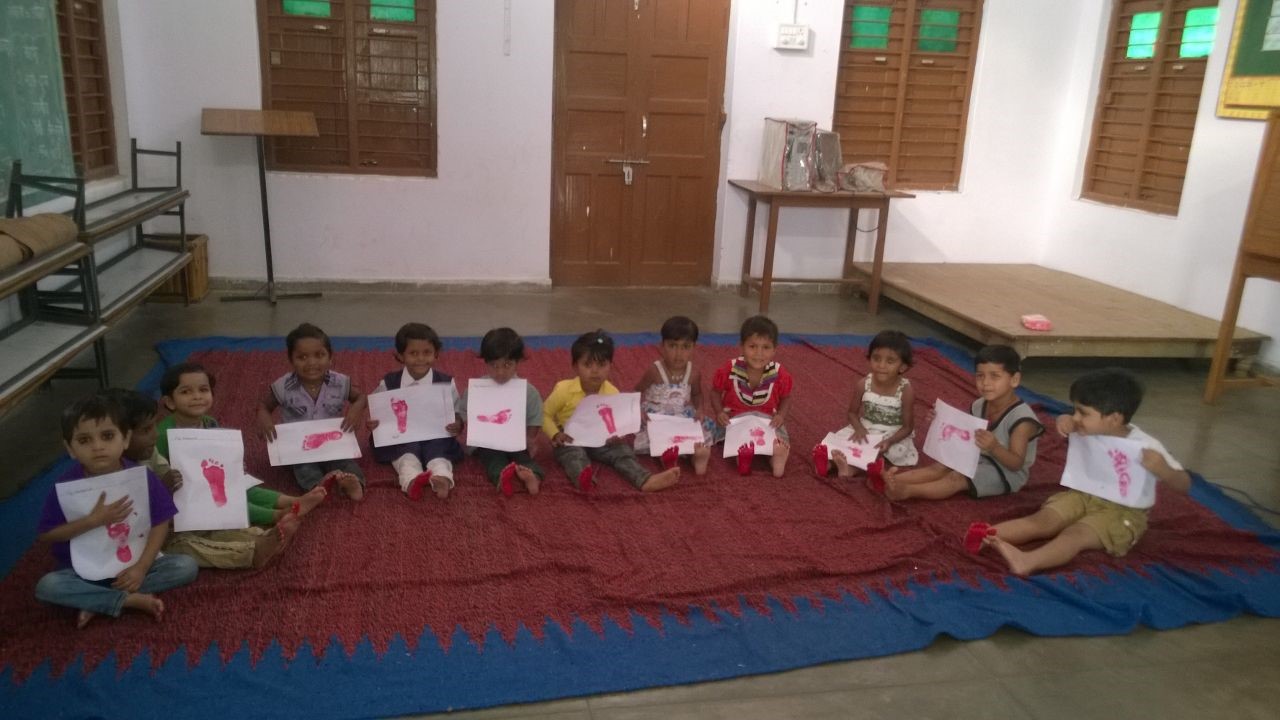
jCRC was started in June of 2015. The center is meant for three to six year-old kids. The center is based on the philosophy articulated by Revered Prof. Prem Saran Satsangi of “Tod-Mod-Jod” or "तोड़-मोड़-जोड़", i.e. learning through designing, joining, adding, assembling, dismantling, shaping, redesigning, reshaping... This method of learning is in contrast to a conventional nursery or kindergarten. Here students walk in without bags, no pencils, no writing and no rote learning.

Humankind's biggest gift is the power of imagination, which typically gets subjugated by the hundreds of no’s that we hear each day, hampering our creativity and our desire to explore. At jCRC, the curriculum is designed to help kids retain their curiosity and become explorers and creators and to boost their ability to think.

The curriculum focuses on the following aspects of development:
  1. Physical development- gross and fine motor movements
  2. Sensory development-auditory, tactile, olfactory and visual
  3. Mental development- cognitive and language development
  4. Emotional and social development
  5. Inculcation of values

The initial activities get the kids to play with soft toys of their choice, sand play, a walk in the garden with gardening tools...as they love to water the plants, sowing seeds and they are given the responsibility to water these plants daily. They learn to make tree-bark impressions and understand the importance of nature, about preserving nature using the center's story bank. The kids play around trees and hug them, they learn the names of the trees, various associated words like the trunk is wide, narrow etc. These activities focus their sense of touch, smell, help in understanding various textures, look at the various colors, helping in language development and conception.


As the kids get settled, they move onto working with simple 2D and 3D block puzzles, do sorting, seriation, tangram, joining pipes, clay models...here there is no right or wrong. As the material is scientific and self-correcting they find out the way on their own.

The kids thread beads and make various patterns, with various shapes and colors being discussed. Once they are ready they are given dressing frames and are taught to button, unbutton, use Velcro, ribbons and laces, this boosts their confidence making them independent!

After a month, the kids move away from soft toys with the day starting with exercise, rhymes and action songs, once a week they play with ball or Frisbee. While exercising they learn about parts of the body, function of each body part, and hear stories on good habits, and get encouragement to eat clean and healthy food and drink clean water. Puppets are used to make these stories and learning fun for the kids.

Over time, the kids move on to tougher and more complex puzzles. Counting using abacus and dominoes is introduced and spindle boxes are used to introduce the concept of zero.

One of the topics of the month is where names of various fruits and vegetables are covered, taught through a game where the mentor becomes the vegetable/ fruit seller and the students become buyers. Here their favorite fruits and veggies and various preparations are discussed, e.g. what all can we make with tomatoes? On the fruit and vegetable day, the fruits and veggies are washed, peeled, cut and eaten together. Later they color, print or paste fruits and veggie images on worksheets.

The kids learn about transportation using toys like trucks, milk vans, cycles, dump vans etc. They are encouraged to ride cycles, and told about how our dear earth is getting warmer, also understanding some of these environmental concepts through cartoons.

Festivals and important events are celebrated with the kids, and the story behind these festivals is told through stories and cartoons.

A short story with a learning/ value and a short prayer ends their day at the center.

This was about Level 1 jCRC, there is a Level 2 jCRC for Class 1 students.

In Level 2 jCRC the activities are similar with the puzzles, blocks and topics becoming more complex. Topics covered are about earth, plant life, and animal kingdom and in much more detail.

This is how these kids are becoming little explorers, nature lovers and creative humans.

Friday, 21 April 2017

Sigma Six Q: Innovation - The First Quality


Sigma Six Q: Innovation - The First Quality

Firstly, we want to thank all of you for your comments and feedback. We welcome these and look forward to a healthy dialogue.

What is the first Quality for a Sustainable future?

In the words of Revered Prof. Prem Saran Satsangi (6th July 2014), “First of all, there should be the quality of Innovation. The purport of Innovation is especially in adopting near state of the art and progressive technology and this too is being done here (Dayalbagh). For example, use of Renewable Energy is done to a great extent. Solar Energy is being utilized. It is being used also in other institutions associated with Dayalbagh. In DEI, nearly 1 Mega-watt power is generated by solar energy. And in Dayalbagh residential houses also its increase is in the third stage of development. Those who are utilizing it know how much qualitative increase is there in power supply as a result. This is an example of Innovation. When you use Innovative Technology, Industrial development is achieved by that and the country progresses and there is overall increase in the quality of life. Solar Energy is being used in Bhandar Ghar Community Kitchen also. Gassifier is also used there but it is not so successful as yet. If we can generate more power from Renewable Energy, it would be possible to do induction cooking in Bhandar Ghar (Community Kitchen), and there will be no necessity of the Gassifier. For this reason, Innovation in technology becomes an inseparable part of Dayalbagh way of life. If you give this the due priority, there are other things also connected with it e.g. creativity, excellence and initiative and novelty (modernity) are however there. And all these four together take you towards what is called Total Quality Management (TQM) which you can also call Complete Quality Management. Since it is our ideal goal to develop a complete human being through our Education Policy and way of life in Dayalbagh, similarly our aim of achieving excellence can also be achieved through innovation.”


Dayalbagh is honing innovation in its residents, its institutions, in its processes and practices and in its way of life. It is also being used to advance the Science of Consciousness, some of which is discussed in the following papers:
  1.  Graph-theoretic quantum system modelling for information/computation processing circuits, Volume 40, 2011 - Issue 8. http://www.tandfonline.com/doi/abs/10.1080/03081079.2011.602016
  2.  Graph-theoretic quantum system modelling for neuronal microtubules as hierarchical clustered quantum Hopfield networks, Volume 43, 2014 - Issue 6. http://www.tandfonline.com/doi/full/10.1080/03081079.2014.893298
  3.  Modelling microtubules in the brain as n-qudit quantum Hopfield network and beyond, Volume 45, 2016 - Issue 1. http://www.tandfonline.com/doi/full/10.1080/03081079.2015.1076405
Innovation also leads to social transformation of the community. Literacy among boys and girls in Dayalbagh is complete. There is no caste system. Marriages are simple. Various innovative programmes are in place for social upliftment, keeping in mind the livelihood, health and empowerment aspects of the community and surrounding villages. In the Dayalbagh way of life, change is evolutionary and not revolutionary, taking everyone along.

In the next post, we will cover the Second Quality needed for a Sustainable Way of Life.

The above post is by Anurag Singh, Editor of the Sigma Six Q blog.