Showing posts with label Sustainable. Show all posts

Saturday, 4 May 2019

शिक्षा के माध्यम से महिला सशक्तिकरण

This is a translation of our post from 18th August 2017 on “Empowering Women through Education”

गांधी जी का कथन है कि यदि हम एक पुरुष को शिक्षित करते हैं, तो केवल एक व्यक्ति ही शिक्षित होता है, लेकिन एक महिला को शिक्षित करने से पूरा समाज शिक्षित होता है।

मेरी माँ, मौसियाँ व दयालबाग़ की उनकी अन्य हमउम्र स्त्रियों का शिक्षा का स्तर अचंभित करता है। यहाँ कई महिलाएँ डॉक्टरेट की डिग्री युक्त हैं और कोई भी महिला स्नातक डिग्री से वंचित नज़र नहीं आती।

भारत के सेंसस आँकड़ो के अनुसार सन् 1951 तक महिला शिक्षा 8.81% थी और सन् 1961 में यह 15.35% हो गई। उस समय वे सभी शिक्षित माने जाते थे जो पाँच वर्ष आयु से अधिक के थे और लिखा हुआ पढ़ सकते थे। उसी समय, यानी की 1950-60 में दयालबाग़ में एक ऐसा महिला समाज था जहाँ सभी महिलाएँ 100% पढ़ी लिखी थीं और कई युवा महिला स्नातक, स्नातकोत्तर या डॉक्टरेट की डिग्री धारी थीं।

आज की पोस्ट में हम 60 वर्ष पूर्व सन 1955-60 के समय को चित्रित कर रहे हैं जब दयालबाग़ में शिक्षा द्वारा महिलाओं को सबल और प्रगतिशील बनाया जा रहा था।

यह लेख डॉ दयाल प्यारी सिंह द्वारा वर्णित है, जो कि प्रेम विद्यालय गर्ल्ज़ इंटर कॉलेज की पूर्व छात्रा हैं व उन्होने बीऐ व बीटी विमेंस ट्रेनिंग कॉलेज दयालबाग़ से सन् 1958-59 में की। तत्पश्चात वह निरंतर आगे बढ़ते हुए महारानी लक्ष्मीबाई गर्ल्ज़ पोस्ट ग्रैजूएट शासकीय (स्वशासी) महाविद्यालय, भोपाल की प्रचार्या बनीं तथा शिक्षा के कार्य को आगे बढ़ाने का नेतृत्व किया।

सस्नेह,
अनुराग

डॉ दयाल प्यारी सिंह लिखती हैं...

शिक्षा के माध्यम से महिला सशक्तिकरण

दयालबाग़ की नीव 20 जनवरी 1915 में, बसंत पंचमी के पावन दिन, परम श्रद्धेय सर आनंद स्वरूप जी ने, अपने अनुयाईयों के लिए एक आश्रम व आध्यात्मिक गृह के रूप में डाली थी। स्थापना के अगले ही दिन दयालबाग़ में प्रथम भवन निर्माण की नींव रखी गयी, जो की शिक्षा के लिए थी। यही भवन राधास्वामी एजुकेशनल इन्स्टिट्यूट (REI) तथा बाद में दयालबाग़ एजुकेशनल इन्स्टिट्यूट (DEI) बना। परम पूज्य आनंद स्वरूप जी ने कटीली झाड़ियों व धारदार पौधों से लदी रेतीली ज़मीन पर अपनी छड़ी से पोईया घाट के समानांतर, दक्षिण से उत्तर तक एक सीधी रेखा खींच दी। इस सीधी रेखा ने शीघ्र अपना आकार, श्रद्धेय मेहता जी महाराज की देख रेख में, एक बड़े निर्माण का रूप धारण किया। इसके लाल ईंट से निर्मित बड़े आकार के गॉथिक घुमावदार आर्चेज़ (तोरन) सूर्य की लाल-लाल किरणों से एकीकृत हो अति आकर्षक नज़ारा पेश करते हैं।

राधास्वामी एजुकेशनल इन्स्टिट्यूट का भवन

शिक्षा प्रणाली में आरम्भ से ही (1 जनवरी 1917) अनेक उच्च स्तरीय क्रियाएँ शामिल थीं जो कि नींव के संस्थापक के महान दूरदर्शी स्वप्न का प्रतीक हैं। उनमें से एक उल्लेखनीय प्रगतिशील क्रिया थी सह-शिक्षा। आरम्भ से ही पहली से पाँचवी कक्षा तक के लड़के-लड़कियों के लिए सह-शिक्षा (co-educational classes) का प्रबंध व आयोजन किया गया। यह वह समय था जब माता-पिता लड़कियों को पढ़ने भेजने में हिचकिचाते थे, वहीं दयालबाग़ में ऐसा स्कूल था जहाँ लड़के लड़कियाँ साथ पढ़ायी करते थे।

14 अक्टूबर 1918 को राधास्वामी सतसंग सभा ने एक महत्वपूर्ण प्रस्ताव को पारित किया जिससे दयालबाग़ में रहने वाले लड़के व लड़कियों को प्राइमरी शिक्षा ग्रहण करना अनिवार्य किया गया। भारत में उस समय डेढ़ प्रतिशत महिलाएँ साक्षर थीं। उसी बैठक में लड़कियों के लिए मिडल व सीनीयर स्कूल खोलने के प्रस्ताव को भी सहमति मिली।

परम श्रद्धेय आनंद स्वरूप जी का विश्वास था कि बच्चों के चरित्र निर्माण में महिलाओं की अति महत्वपूर्ण भूमिका है। उन्होंने स्पष्ट रूप से, प्रभावशाली शब्दों में कहा कि आनेवाली पीढ़ी के मानसिक, नैतिक व आध्यात्मिक विकास महिलाओं पे निर्भर है। उन्होंने आगे कहा कि हमें समझ लेना चाहिए कि जब तक लड़कियों का पालन-पोषण व उनकी शिक्षा ठीक ढंग से क्रियान्वित नहीं की जाएगी, तब तक सतसंग समाज उन्नति नहीं कर सकता।

उनका सोचना था कि भारत की उन्नति स्त्रियों पर निर्भर है और वह चाहते थे कि सतसंगी इस बात पर ख़ास ध्यान देवें और अपनी बेटियों व बहनों की शिक्षा हेतु सही इंतज़ाम करें।

विमेंस ट्रेनिंग कॉलेज के अध्यापक

इसी विचार को कार्यान्वित कर छात्राओं के लिए सन् 1930 में एक मिडिल स्कूल, प्रेम विद्यालय आरम्भ किया गया जिसे चार वर्ष बाद हाई स्कूल और तत्पश्चात 1939 में इंटर्मीडीयट तक उन्नत किया गया।

परम श्रद्धेय मेहता जी महाराज ने स्त्री शिक्षा को आगे बढ़ाने हेतु विचार अत्यंत प्रेरणादायी शब्दों में अभिव्यक्त किए कि भारत अपनी महिला समुदाय से आशा करता है कि वे अपने अंदर शिक्षा की लौ प्रज्वलित करेंगी तथा ज्ञान की रोशनी से अपने चारों ओर फैले अज्ञान के अंधकार को दूर कर, घृणा, आपसी लड़ायी-झगड़े को हटाकर, प्रेम व शांति का वातावरण निर्मित करेंगी।


सन् 1947 में विमेंस ट्रेनिंग कॉलेज के उद्घाटन के अवसर पर परम श्रद्धेय मेहता जी ने कहा कि मैनेजिंग कमिटी आर ई आइ ने विमेंस ट्रेनिंग कॉलेज (WTC) आरम्भ किया है ताकि युवा महिलाएँ जिन्हें स्नातक उपाधि प्राप्त है, उन्हें नौकरी के लिए कार्य कुशलता की ट्रेनिंग दी जा सके। उन्होंने यह भी फ़रमाया कि उनका विश्वास है कि पढ़ी लिखी युवा महिलाएँ अपने घर व बाहर एक आदर्श उदाहरण स्थापित करेंगी।

सुखिया बहेनजी - प्राध्यापिका


मेरा जन्म बाँदा ज़िला, उत्तर प्रदेश में हुआ, जहाँ पर लड़कियों की शिक्षा हेतु दसवीं कक्षा तक का एक सरकारी स्कूल था। वर्ष 1954 में मेरे माता पिता ने हम भाई बहनों को दयालबाग़ भेज दिया जहाँ शिक्षा की पूर्ण सुविधाएँ थीं। शिक्षा का स्तर उँचा था, वातावरण सुंदर, सुरक्षित व उच्च मूल्यों व आदर्शों से परिपूर्ण था।

जब मैं अपनी बहनों के साथ दयालबाग़ आई तो पाया कि लड़कियों की शिक्षा पर यहाँ विशेष ज़ोर था तथा किसी प्रकार का जात-पात, रंग-भेद, ऊँच-नीच आदि का नामोनिशान नहीं था। स्वस्थ वातावरण गवाह था कि प्रत्येक छात्रा अच्छी शिक्षा प्राप्त करेगी। प्रेम विद्यालय तथा विमेंस ट्रेनिंग कॉलेज ने लड़कियों को सबल  सशक्त बनाने में बहुत ही अहम भूमिका अदा की है। छात्रा के सर्वागीण विकास ही संस्थाओं का लक्ष्य था और इसी कारण पास के शहरों  राज्यों से छात्राएँ यहाँ पढ़ने आती थीं। शिक्षक वर्ग उच्च स्तरीय शिक्षा प्राप्त था। योग्य छात्राओं हेतु विशेष छात्रवृति का प्रबन्ध था।

एक अन्य उल्लेखनीय श्रेत्र वोकेशनल शिक्षा का था। मुझे व मेरी बहनों व अन्य छात्राओं को उचित नौकरी प्राप्त करने में इस कारण बहुत मदद मिली। आज यह पूर्व छात्राएँ शिक्षा जगत के उच्च पदों पर स्थापित हैं तथा महाविद्यालय की यादें दिल में संजोये हैं।

यूथ फ़ेस्टिवल टीम तीन मूर्ति भवन में

कॉलेज द्वारा प्रस्तुत सांस्कृतिक कार्यक्रम उच्च स्तर के होते थे। मुझे व मेरी सहपाठी छात्राओं को दिल्ली के तालकटोरा ग्राउंड में आयोजित यूथ फ़ेस्टिवल में, आगरा यूनिवर्सिटी का प्रतिनिधित्व करने का सौभाग्य भी प्राप्त हुआ। WTC का समूह नृत्य बहुत सराहा गया व राष्ट्रपति भवन के at home व तीन मूर्ति भवन में पंडित नेहरु ने हमारा मनोबल बढ़ाया।

खेलकूद भी स्त्री शिक्षा का अभिन्न अंग था, जिसमें वॉलीबॉल, खो-खो और कबड्डी लड़कियों के मनपसंद खेल थे। कॉलेज के NCC विंग में हर रविवार राइफ़ल शूटिंग व परेड में छात्रायें शामिल होती थीं।

आज भी यह मूल्यपरख शिक्षा, महिलाओं के सर्वांगीण विकास हेतु आयोजित होती है और महिला सशक्तिकरण को मजबूती प्रदान कर रही है।

Sunday, 14 April 2019

Dayalbagh: An Eco-Village

A Wikipedia article defines Eco-Villages as "... traditional or intentional community with the goal of becoming more socially, culturally, economically, and ecologically sustainable. It is consciously designed through locally owned, participatory processes to regenerate and restore its social and natural environments".

A tree-laden road within Dayalbagh

The article further states, "Eco-villagers are united by shared ecological, social-economic and cultural-spiritual values. Concretely, eco-villagers seek alternatives to ecologically destructive electrical, water, transportation, and waste-treatment systems, as well as the larger social systems that mirror and support them. Many see the breakdown of traditional forms of community, wasteful consumerist lifestyles, the destruction of natural habitat, urban sprawl, factory farming, and over-reliance on fossil fuels as trends that must be changed to avert ecological disaster and create richer and more fulfilling ways of life".


And what better example of an eco-village than Dayalbagh. Dayalbagh is more like a small town, with 2,500+ permanent residents, the population increasing manifold during Basant, Holi and Bhandara weeks with the influx of pilgrims. Additionally, its way of life thinking and practices influence the communities around Dayalbagh.

Our post below is on practices followed in Dayalbagh, the eco-village.

Go green,
Anurag
Dayalbagh, an eco-village

Eco-villages are urban or rural communities of people who strive to integrate a supportive social environment with a low-impact way of life. To achieve this, they integrate various aspects of ecological design, permaculture, ecological building, green production, alternative energy, community building practices, and much more. Eco-villages are living models of sustainability. They represent an effective, accessible way to combat the degradation of our social, ecological, and spiritual environments.

Dayalbagh is an eco-village/city, quiet and peaceful with a largely self-sustaining agricultural production, water harvesting and increasing use of renewable solar energy.


Prem Nagar, a Mohalla in Dayalbagh

Education, agriculture and industries prosper in harmonious and ecologically sustainable manner. Dayalbagh is greener and more sustainable since its foundation in 1915, even though its population has increased. Dayalbagh’s eco-development, presents an admirable combination of material and spiritual development. It represents a classic case of self-sustained eco-friendly existence of human settlement in close harmony with the nature.

Activities

Self-Governance
Civic affairs are managed through a committee of elected representatives under the overall supervision and control of a primary committee. The eco-village is divided into mohallas, with each having a Sarpanch and Panches for different activities of the mohallas.  Honorary services are imparted by the residents of the village.

Water and Electricity Supply
Water supply to the village is provided through tube wells. To sustain ground water levels, rain water harvesting schemes have been implemented. For electricity needs the village bulk purchases are made from M/S Torrent Power Ltd. To ensure uninterrupted electricity supply, the village also has its own back up generation facility. There is also an increasing use of solar power. Solar powered lights have been installed in open spaces within and outside the village in selected areas and also for street lighting. Solar power units are installed in all institutional buildings. Moreover, to reduce power consumption, LED lights are used to the maximum possible extent.


Renewable Power at Dayalbagh


Renewable Power in Cooking Applications

Community Kitchen
Bhandar Ghar is the Rasoi (Kitchen) which prepares lunch and dinner for the residents of the Dayalbagh colonies and for the visitors.


The raw material like wheat, rice, lentils, mustard oil, vegetables including potatoes and onions are grown and produced in the Dayalbagh fields with selfless service of the Dayalbagh Residents and Visitors. The Bhandar Ghar has minimal number of regular staff and the major part of the operation is supported by teams of volunteers in the age group of 18 to 90 yrs.


Bhandar Ghar: The Community Kitchen

Sewage and Garbage Disposal
There is a regular sewage system and garbage disposal. Garbage disposal includes segregation of biodegradable (kitchen waste) and non-biodegradable waste at each house of the village. There are well established treatment facilities for effluents. Treated water is used for irrigation.


Aeration Ponds

Security and Surveillance
Safety and Security of the colony is maintained by day and night patrolling (pehra) in shifts by the residents. Community policing through watch and ward department is performed for safeguarding public property. Most recently, CCTV cameras have been installed at various locations in the village which are also monitored by the residents.

The streets are patrolled by Residents at Night

Educational Hub
Education from the pre-nursery to the Ph.D. level and beyond is imparted through DEI. Additionally, the village has a School of Languages to teach regional and foreign languages, a School of Art and Culture to provide training in music, dance and handicrafts, a Tailoring school for empowerment of women from the weaker sections of the society, an Indian Music Training Center and a School of Dress Designing and Interior Decoration. A Day Boarding School has also been set up to provide special tutorial teaching to the students of under privileged families who do not have adequate facilities at home.

Primary School in Dayalbagh

Economical Agriculture and Farming
The topography of the land was initially dominated by ravines, low mounds, patches of rocks and stones and alkaline soil, sand dunes and patches of reeds and weeds, lying as waste-land. Since 1942 under the ‘Grow more food’ campaign, the uneven and unproductive barren lands have gradually been made suitable for cultivation. Today, in the Dayalbagh area, there are nearly 1531 acres of agricultural farms where cereals, pulses, oil seeds, vegetables, fruits, cash crops (potato, sugarcane, etc.) and fodder are cultivated. Farming activities are eco-friendly and based on organic farming techniques that helps in soil conservation and enrichment.


Residents, Students and Pilgrims performing Agriculture work

Both traditional and modern agricultural practices are adopted here. Agriculture is supplemented by Gaushala wastes for meeting out its manure requirement. Cooperative efforts are made in performing different agricultural activities and no chemical substances like insecticides, fungicides, weedicides or chemical fertilizers are used. The agricultural produce of Dayalbagh is sufficient to meet the requirement of the residents and the pilgrims who come for short visits.

Fodder for the Cattle at Dayalbagh Dairy

Horticulture
Horticultural activities are practiced in Dayalbagh: there are orchards of mango, Jack fruit (Artocarpus spp.), Guava (Psidium) and various citrus species along with many other fruit trees to provide large canopy cover as well as a supply of some fruit.
Healthy Diet: Horticulture - Kinnow Plantation

Cattle Yard and Dairy
Dayalbagh has its own cattle yard with over 800 head of cattle which fulfills the milk requirement of the residents. Its fodder requirements are met internally round the year. Animal waste is recycled and used as manure in fields. The dairy produces pasteurized milk and several milk products employing the most advanced techniques. These products are also sent outside the country.


Retirement Home for Older Cattle

Green Belt
The construction of green-belts has been an important feature of land use planning in Dayalbagh. These are in the form of a tree corridor all along the Yamuna river bank, in agricultural and farming areas, and, areas earmarked for timber plantation.

Ecology and Biodiversity in the Green Belt
The western part of Dayalbagh eco-village has triangular patches of dense plantations reaching the bank of the Yamuna. While most of the uneven land has been leveled and converted into well-formed green fields, in some areas the uneven topography remains. This area is being used for cultivating crops such as taramira, growing trees such as amla and some timber plantation. An orchard of citrus fruits has also been established in this area.

Two species, Prosopis and Acacia are also maintained in the region.

Waste Treatment: Composting
In Dayalbagh, domestic waste is mostly organic, and each member of the population produces approximately 200 kg of organic solid waste per year. Other sources include garden litter and wastes from dairy sheds, etc. The residents segregate the wastes into biodegradable and non-biodegradable material which is collected: pooled biodegradable wastes are directly sent to composting sites while non-biodegradable materials are sent to recycling points.

Transport
The most popular modes of transport in the area are bicycles and cycle rickshaws; efforts are on restrict the number of fossil-fuel driven vehicles in this area to reduce congestion and to accompanying noise and air pollution. Within the Dayalbagh colony, transport is provided by electric vehicles and rickshaws.


Electric Vehicle, ready to ferry Residents and Visitors

Dayalbagh has grown into a center of high spiritual, academic and moral values and has provided solace, satisfaction, peace and enlightenment to its residents and visitors who come in thousands seeking inner and outer peace.

Monday, 31 December 2018

Building Innovators and Creators: Tod-Mod-Jod

Gwynne Shotwell, the President and Chief Operating Officer at SpaceX, states, “You can't be on the cusp of innovation and at the forefront of technology if you're wearing blinders. If you don't have an exploration program where you're exploring your world here on Earth, underwater, and in space, then you're wearing blinders and handicapping yourself”.

Many of the programs at Dayalbagh and DEI are designed to get children to be early explorers. Our post today is on “Tod-Mod-Jod”, a program to build curiosity in children and help them become innovators, creators and inventors.

Happy Exploring,
Anurag


तोD-मोD-जोD


Education is the crucible in which innovations and creativity are nurtured. Promoting creativity and originality through our educational institutions is a first step towards broadening and deepening the impact of innovation in our society and economy. To foster creativity at an early stage and to encourage an innovative mindset in the learners, it is necessary to provide a hands-on learning environment where students can de-construct, re-construct or re-purpose everyday objects that they see or use.


Rationale
The innovative skilling initiative in Dayalbagh Educational Institutions is based on the concept of, “Tod-Mod-Jod” or “तोD-मोD-जोD”, i.e. learning through dismantling, joining, adding, assembling, shaping, designing, redesigning, reshaping. This method of learning is in contrast to the conventional training. तोD-मोD-जोD (TMJ) not only allows students to understand the scientific principles behind the everyday products they use, but also helps the students to expand their horizons to larger concepts and applications so as to enable them to solve real world problems. For instance, students typically do not know the inside of a ceiling fan, तोD-मोD-जोD (TMJ) session would help them to understand how mechanical airflow and electric concepts and components are used.


Description
Dayalbagh Educational Institute introduced तोD-मोD-जोD at middle school level for innovative and self-motivated students who want to create a new product out of those used in daily life. The teacher as mentor encourages students to follow their creative instincts. The feedback from students shows a complete change in their perception towards machines and devices. Curiosity and inquisitiveness are encouraged. These are critical for nurturing an innovative mindset. It is hoped that तोD-मोD-जोD centres will develop a way to excite and challenge young minds in a fun learning environment.


Impact
  • तोD-मोD-जोD centre provides a hands-on learning environment where students can de-construct, re-construct or re-purpose everyday objects that they see or use.
  • Helpful in establishing the concept of learning through “Tinkering”, “Discovery”, and Experimentation”.
  • Early Start towards building a nation of creators not just consumers of products.
  • Make education relevant, real and fun

Student Testimonials
  • “Will always be curious on how what I use actually works”.
  • “Connects multi-disciplinary concepts learnt in textbooks to real life applications”.
  • “We want तोD-मोD-जोD classes every day”.

Thursday, 12 July 2018

टिमरनी के भावी नोबेल लॉरीएट्स


यह पोस्ट दिनांक ३०-जून-२०१७ के “The Future Nobel Laureates of Timarni” का हिंदी रूपांतरण है।

जब मैं सुन्दर झीलों के शहर भोपाल में अपनी गर्मियों की छुट्टी अपने भतीजे-भतीजी और बेटे के साथ गुज़ार रहा था और उनके खेलकुद का भरपूर आनन्द उठा रहा था, मैं इस विस्मय में पड़ गया और सोचने लगा कि क्या इनकी बुद्धि अनुवांषिक है या की वातावरण, शिक्षा व सीखने के उचित अवसरों का उनकी बुद्धि पर गहरा प्रभाव है।

एक इंटरनेट अनुसंधान इंगित करता है कि बेशक बुद्धि पर ‘जीन्स’ का प्रभाव होता है, किंतु मनुष्य का पालन-पोषण और उचित वातावरण उसके व्यक्तित्व व बुद्धि को निखार देते हैं। हमारी वास्तविक बुद्धि हमारी अपार बौद्धिक क्षमता का एक छोटा सा अंश है और वास्तविक बुद्धि को तीव्र करने के लिए सही पालन-पोषण और वातावरण ज़रूरी हैं।

इस यात्रा पर मुझे टिमरनी जाने का अवसर मिला - हलचल से भरा यह एक छोटा सा जीवंत नगर है जो कि भोपाल से चार घण्टे की दूरी पर स्थित है। यहां दयालबाग एजुकेशनल इंस्टिट्यूट, शिक्षा और अच्छा वातावरण देकर, ऊर्जा से परिपूर्ण बच्चों के भविष्य को उज्जवल तथा उन्हें मेधावी बनाता है।


यह वन्दना प्रकाश द्वारा एक आमंत्रित ब्लॉग पोस्ट है जो कि टिमरनी के राधास्वामी हाई स्कूल में JCRC (जूनियर चिल्ड्रन रिक्रीएशन सेन्टर) चलाती हैं जिसमें सुविधाओं से वंचित बच्चों को एक अति उत्तम शुरुआत मिल सके।

खुश रहिये,
अनुराग

वन्दना लिखती हैं.........

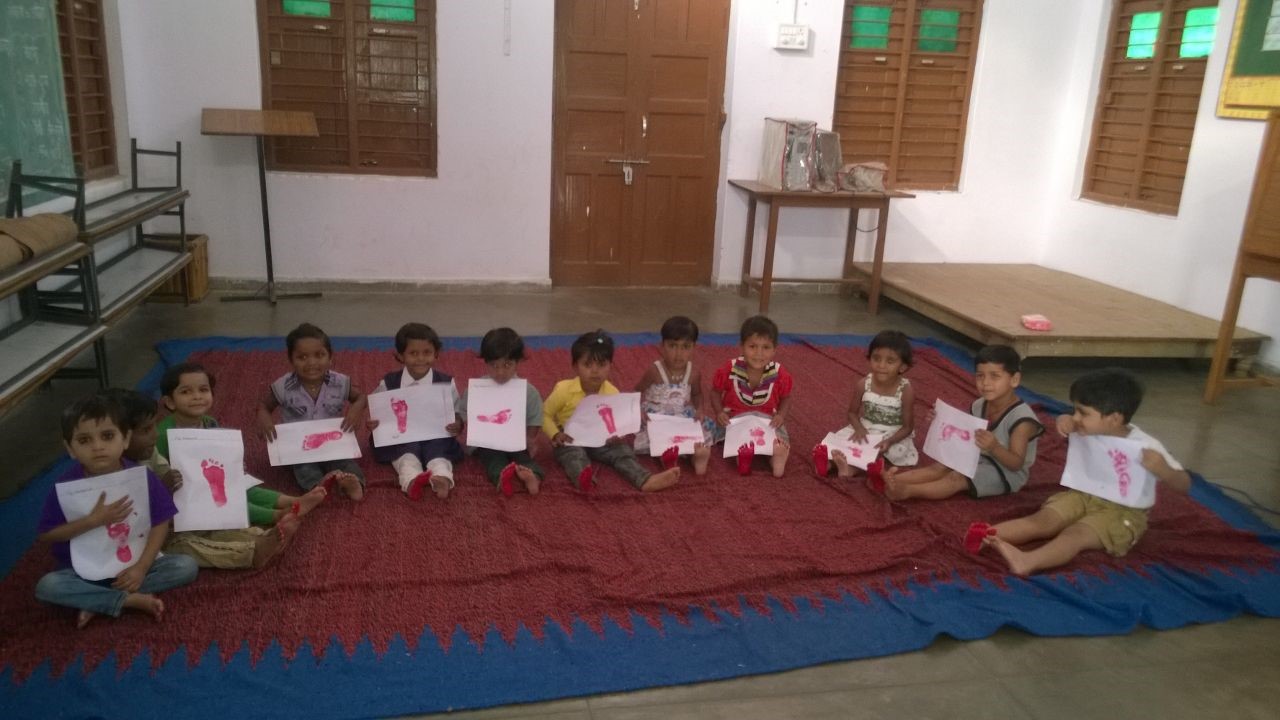
JCRC, १२ जून २०१५ में प्रारंभ किया गया, इसमें ३ साल से ६ साल के बच्चों को लिया जाता है। यह परम श्रध्येय प्रो. प्रेम सरन सतसंगी जी द्वारा व्यक्त की गयी फिलॉसफी ‘तोड़-मोड़-जोड़’ पर आधारित है। इसमें बच्चे तोड़ने और जोड़ने के द्वारा वस्तु का रूपान्तरण व डिजाइन देना सीखते हैं।

यह कार्यप्रणाली पारम्परिक नर्सरी बाल विकास से भिन्न है। यहां बच्चे बस्ते, पेंसिल, रबर व किताब इत्यादि के बिना ही आते हैं।


मानव जाति की सबसे बड़ी देन व शक्ति कल्पना है। जब हम जीवन में लोंगो से अनेकों बार 'न’ सुनते हैं तो हमारी रचनात्मकता और जानने की इच्छा में थोड़ी बाधा आ जाती है। इसी को ध्यान में रखते हुये JCRC का पाठ्यक्रम इस तरह से रचा गया है की बच्चों की उत्सुकता बरकरार रहे और वे अपनी रचनात्मक सोच से नए नए प्रयोग करें।

पाठ्यक्रम कुछ पहलुओं को ध्यान में रखकर रचा गया है-

  1. शारीरिक विकास - सकल और सही मोटर कौशल।
  2. इंद्रियों का विकास - श्रवण, स्पर्श, दृष्टि, सूंघने एवं स्वाद की।
  3. मानसिक विकास – बुद्धि, भाषा एवं संज्ञानात्मक विकास
  4. भावनात्मक व सामाजिक विकास
  5. मूल्यों को आत्मसात करना


प्रारंभिक गतिविधियों में बच्चे अपनी पसंद के सॉफ्ट टॉय से खेलते हैं, रेत में खेलते हैं, बगीचे में घूमते हैं, पौधों को पानी भी देते हैं, बीज बोते हैं और फिर उनकी रोज पौधों में पानी देने की जिम्मेदारी समझाई व सौंपी जाती है। बच्चों को प्रकृति का महत्व समझाया जाता है। ये पेड़ों की छाल को छापते हैं और इन्हें प्रकृति से संबंधित कहानियां भी सुनायी जाती हैं। ये खुब खेलते हैं, पेड़ों को गले लगाते हैं, उनका आलिंगन करते हैं व उनके नाम भी रखते हैं। इससे उन्हें प्रकृति के प्रति लगाव होता है और इन गतिविधियों से ये स्पर्ष, सूंघने, रंग और उनके बनावट के बारे में समझ जाते हैं जो कि इनके भाषा विकास व संकल्पना को बढ़ाते हैं।


जब बच्चे इस वातावरण और शुरु की गतिविधियों में रच बस जाते हैं फिर वे 2D और 3D ब्लॉक पहेली की ओर बढ़ते हैं, यहां ये छटाई, क्रमबद्धता और टैनग्रैम करते हैं। पाइप जोड़ते हैं व चिकनी मिट्टी से भी कई चीज़ें बनाते हैं। यहां कुछ सही गलत नहीं होता, क्योंकि सामग्री वैज्ञानिक और आत्मसंशोधित होती है। यह बच्चे अपने रास्ते स्वयं खोज लेते हैं जिससे इनका आत्मविश्वास भी बढ़ता है।

बच्चे धागों में कई रंग बिरंगे मोती पिरोते हैं जो भिन्न-भिन्न आकार के दिए जाते हैं। जब वे इस में निपुण हो जाते हैं उन्हें बटन, वेलक्रो, रिबन तथा लेसेस का उपयोग सिखाया जाता है। वे स्वयं अपने कपड़ों के बटन बंद करते हैं, स्वयं जूते पहनते हैं व लेसेस बाँधते हैं। यह क्रियाएँ उन्हें स्वतंत्र रूप से काम करना सिखाती हैं।


कुछ समय बाद ये अपना दिन व्यायाम, कविता और अभिनय तथा गीत से शुरू करते हैं। हफ्ते में एक दिन बॉल व फ़्रिस्बी से भी खेलते हैं। व्यायाम के दौरान ये शरीर के अंगो व उनके कार्यों के बारे में सीखते हैं, साथ ही उन्हें अच्छी आदतों व स्वच्छ खाने के बारे में कहानियां सुनायी जाती हैं।


कहानियों में कठपुतलियों का प्रयोग किया जाता है जिससे वे और भी मनोरंजक हो जाती हैं। आगे बढ़ते-बढ़ते वे मुश्किल पहेली खेलों की ओर बढ़ जाते हैं। एबेकस के इस्तेमाल से गिनती की शुरुआत की जाती है और स्पिण्डल बॉक्सेस से ज़ीरो यानी शून्य की संकल्पना भी सिखायी जाती है।


महीने का एक विषय यह भी होता है जहां सारे फलों और सब्ज़ियों के नाम सिखाए जाते हैं। यह खेल के जरिये बताये जाते हैं। अध्यापक सब्ज़ी पर फल बेचने वाले बनते हैं और बच्चे खरीददार या ग्राहक। कौन सी सब्ज़ियों से क्या-क्या बनता है वो भी बताया जाता है। जैसा कि आम से पना, अचार, चटनी इत्यादि बनाये जाते हैं। सब मिल कर फल धोते हैं और मिलकर खाते हैं जिससे मिल बाँटकर खाने का भाव भी जागृत होता है। फलों और सब्ज़ियों  के चित्र भी कॉपी में चिपकाते हैं।


यातायात के साधन भी खिलौनों द्वारा खेल-खेल में सिखाये जाते हैं। ट्रक, वैन, साइकिल इत्यादि खिलौने खेलने के लिये दिये जाते हैं। साइकिल चलाने के लिये प्रोत्साहित किया जाता है, साथ ही वजय भी बतायी जाती है कि साइकिल चलाने से देश और पर्यावरण को लाभ होगा और विषैली गैस कम होगी और पर्यावरण शुद्ध रहेगा।


सारे त्यौहार और महत्वपूर्ण घटनायें भी बच्चों के साथ खूब उत्साह से मनाए जाते हैं और उन सब के बारे में पौराणिक कहानियाँ सुनायी जाती हैं। मूल्यों से संबंधित लघु कहानी व प्रार्थना के साथ सेंटर पर कार्यक्रम समाप्त किया जाता है।